

Is Your Hardening Inductor Limiting Process Performance?
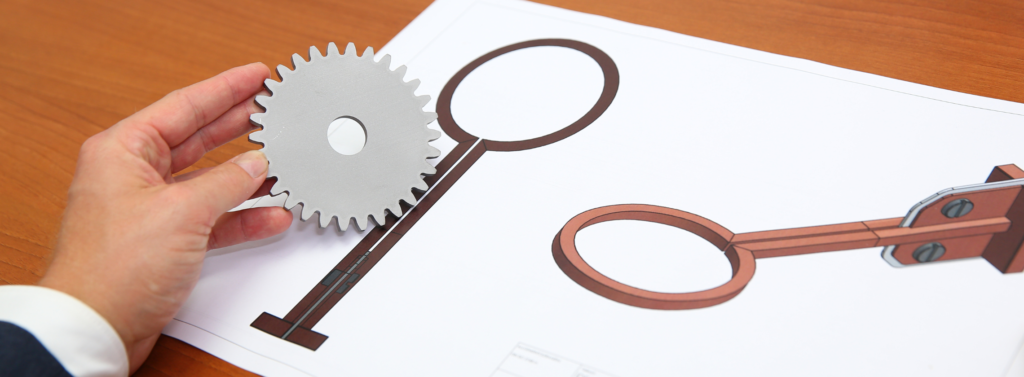
Why Automotive Manufacturers Should Look Beyond the Power Supply.
When manufacturers encounter problems in an induction hardening process, the first instinct is often to evaluate the power supply, controls, or machine settings.
In many cases, however, the greatest opportunity for improvement lies elsewhere: the inductor itself.
As application engineers, we frequently work with automotive manufacturers producing pinions, rack bars, tripodes, and other driveline components who are experiencing challenges such as inconsistent hardness patterns, excessive distortion, short coil life, or process variability. While these issues are often attributed to the induction system, they can frequently be traced back to the design of the hardening inductor.
The reality is simple:
The success of an induction hardening process depends as much on the inductor as it does on the power supply.
The Critical Role of the Hardening Inductor
The inductor is responsible for transferring energy to the component and creating the heating pattern required for the hardening process.
Its design directly affects:
- Heat distribution
- Hardness profile consistency
- Case depth control
- Distortion levels
- Cycle times
- Energy efficiency
- Process repeatability
For automotive manufacturers operating high-volume production lines, even small improvements in these areas can have a significant impact on productivity and quality.
A well-designed inductor helps ensure that every component receives the same heating pattern, regardless of whether the application involves a pinion, rack bar, single-winding component, double-winding component, multiple-winding component, or tripode.
Common Challenges in Automotive Hardening Applications
Inconsistent Hardness Patterns
Automotive components are subject to strict quality requirements. Variations in hardness depth or hardness location can lead to rejected parts, increased inspection requirements, and reduced process confidence.
In many cases, the root cause is uneven heat distribution resulting from an inductor design that does not adequately match the component geometry.
Excessive Distortion
Distortion remains one of the most common concerns in induction hardening.
Localized overheating, poor coupling, or inefficient heat placement can introduce unnecessary thermal stress into the component.
Optimizing the inductor design often helps achieve the desired hardness profile while minimizing unwanted dimensional changes.
Reduced Coil Life
Frequent inductor replacement affects both maintenance costs and production uptime.
Proper engineering of cooling circuits, conductor geometry, and operating conditions can significantly improve inductor durability.
Long Cycle Times
Production efficiency is critical in the automotive industry.
An optimized inductor can improve heating efficiency, reduce energy losses, and help manufacturers achieve shorter cycle times without compromising quality.
Why Standardized Solutions Are Not Always Enough
Many suppliers offer standard designs intended to serve a broad range of applications.
While this approach may simplify product selection, it does not always provide the best solution for demanding automotive manufacturing processes.
The geometry of a rack bar differs significantly from that of a tripode. A single-winding component presents different challenges than a multiple-winding component. Production requirements, materials, hardness specifications, and throughput targets vary from one manufacturer to another.
As a result, the most effective hardening inductors are often those designed specifically around the application.
The Advantage of Working with an Independent Specialist
When a hardening pattern needs adjustment, a cycle time must be reduced, or a coil design requires refinement, manufacturers need engineering support that can respond quickly.
Working with an independent specialist means fewer layers between your production challenge and the engineer responsible for solving it.
At IDEA GmbH, we focus on application-driven engineering rather than standardized product offerings.
Our approach includes:
Direct Access to Application Engineers
Manufacturers work directly with the engineers evaluating the application and developing the solution.
Responsive Technical Support
Production challenges do not follow corporate schedules. Fast access to engineering expertise helps reduce delays and accelerate problem resolution.
Application-Specific Inductor Design
Every component has unique requirements. Our designs are developed around the application rather than adapted from a standard catalogue.
Long-Term Engineering Partnership
Our involvement does not end when an inductor is delivered. We continue supporting customers as production requirements evolve and new challenges arise.
A Different Approach to Hardening Performance
In today’s automotive industry, manufacturers face increasing pressure to improve quality, reduce costs, increase throughput, and maintain process stability.
Meeting these objectives requires more than selecting the right induction system. It requires understanding how the inductor influences every aspect of the heating process.
For many manufacturers, the greatest gains are not found in replacing equipment but in optimizing the component that directly controls heat generation and distribution.
That component is the inductor.
Ready to Evaluate Your Hardening Process?
If you are experiencing challenges with hardness consistency, distortion, cycle times, coil life, or overall process repeatability, it may be time to take a closer look at the inductor.
Our engineering team can review your application, evaluate your current process, and identify opportunities for improvement.
Whether you are producing pinions, rack bars, tripodes, or other automotive components, we are ready to help you achieve more consistent and reliable hardening results.
Schedule a Short Process Review
Call us: +49 (0) 7445 85445-0 or send the form below: